|
Product Details:
|
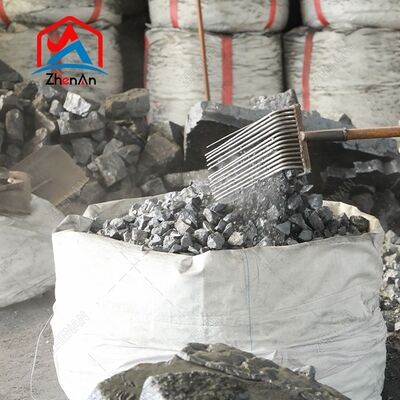
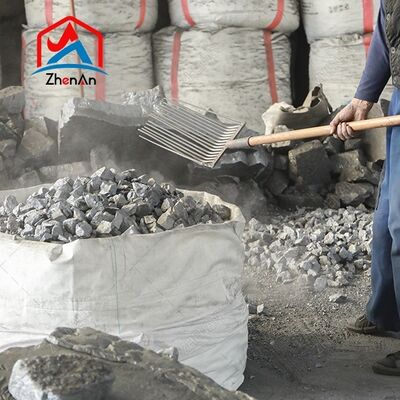
| Material: | Ferro Silicon Magnesium | Color: | Gray |
|---|---|---|---|
| Chemical Compostion: | Si Fe Al S P | Shape: | Lump |
| Packing: | In 1MT Big Bags | Application: | Steel Making |
| Highlight: | FeSiMg nodulizer for automotive castings,Silicon Magnesium nodulizer for pipe manufacturing,Ferro Silicon Magnesium for foundry applications |
||
A plant that supplies both automotive castings and pipe cannot afford two unrelated treatment practices. Automotive work is inspected for nodule count, elongation and machinability; pipe is inspected for pressure tightness and wall soundness. Both come down to the same requirement: a magnesium residual that arrives at the mould within a narrow band, heat after heat. A silicon magnesium FeSiMg nodulizer gives that consistency from one grade family, so the treatment station, the certificate format and the charge calculation stay the same across product lines that look nothing alike.
Mixed programmes buy in mixed formats, and the packing has to suit both ends of the plant. A pipe bay with a crane takes 1000 kg jumbo bags; an automotive cell with a metered feeder takes 25 kg bags of a finer cut. Both formats carry the same lot number and the same certificate, which is what makes a mixed container practical.
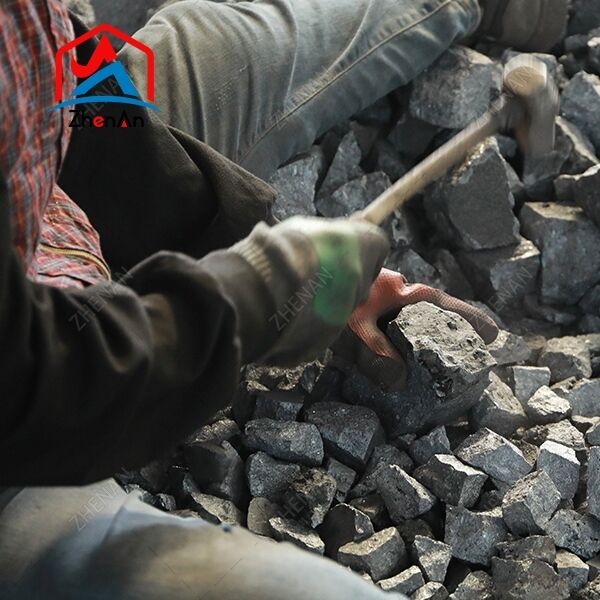
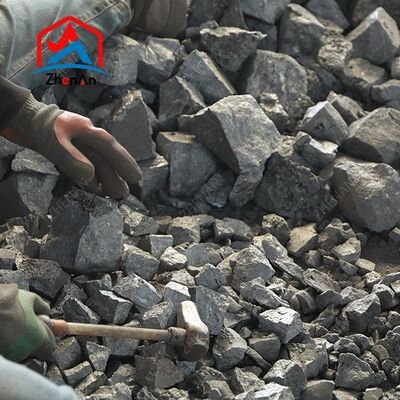
ZhenAn ships the grades as screened lump and granules, palletized for container loading, with each grade bagged and marked separately when several are combined in one shipment. Fresh material has a clean break and little dust; bags that have taken water show white patches and crumbling edges and should be rejected at receiving rather than at the ladle. Delivery is quoted at 7–14 days from advance payment, which a plant running two production lines should treat as the floor for its reorder point.
| Grade | Mg (%) | Re (%) | Si (%) | Ca (%) | Al (%) |
|---|---|---|---|---|---|
| FeSiMg6Re1 | 5.0–7.0 | 0.5–1.5 | 45.0 min | 2.0–3.0 | 1.0 max |
| FeSiMg7Re1 | 6.0–8.0 | 0.5–1.5 | 45.0 min | 1.0–1.5 | 1.0 max |
| FeSiMg7Re3 | 6.0–8.0 | 2.0–4.0 | 45.0 min | 2.0–3.5 | 1.0 max |
Silicon is written at the 45.0% GB/T 4138-2015 minimum, normally delivered at 45–48%, and aluminium stays at the 1.0% ceiling. Magnesium and rare earth are the working variables: 5.0–7.0% with 0.5–1.5% rare earth for general automotive work, 6.0–8.0% for heavier sections, and the Re3 version where the charge brings in tramp elements that would otherwise consume magnesium.
The two lines also work to different residuals. Automotive thin-wall work runs 0.045–0.055%, pipe 0.035–0.045%, and one grade family can serve both when the dose is set heat by heat rather than fixed for the year.
Fractions run from 0.25–2 mm through 1–5 mm, 5–20 mm, 10–30 mm and 10–50 mm. An automotive cell feeding a wire or a dispenser wants the fine end; a pipe bay charging a bell wants the coarse end. Buying both from one grade family keeps the metallurgy comparable even though the handling differs.
Each application places the alloy under a different test. Automotive parts are sectioned and measured; pipe is pressure tested. A heat that satisfies one may still fail the other, which is why the residual band, not the visual appearance, is the acceptance criterion.
Two practical points save arguments later. Ask for the bags to be marked by grade and by line, and agree the size tolerance in writing. A container that mixes cuts without labels turns receiving into a sorting job.
Can one grade serve both automotive and pipe work?
Often yes, if the sections are comparable. Where they are not, the 6% and 7% windows cover the two ends.
How do we keep the residual stable across two lines?
Weigh per heat, log the certificate figure and review the trend weekly.
Is the Re3 grade worth the extra cost?
It is where the charge is dirty. On a clean charge the Re1 grades usually suffice.
What causes a sudden drop in nodule count?
Usually magnesium loss from long holding or a thin slag cover, not a change in the alloy.
How fine can the automotive cut go?
Down to 0.25–2 mm for metered feeding.
Do you supply mixed containers?
Yes, with each grade bagged and certified separately.
How should the material be stored?
Dry, covered, sealed until weighing, rotated first in first out.
What documentation ships with the container?
A lot certificate listing each element against its window.
Name the two product lines, the fractions each one uses and the combined monthly tonnage. Send that to sales@zaferroalloy.com, or message the desk on WhatsApp +86 15518824805 when a container has to be booked against a production start. The offer is split by line, so the automotive cut and the pipe cut each receive the fraction that cell can actually handle.
Contact Person: Mr. xie