|
Product Details:
|
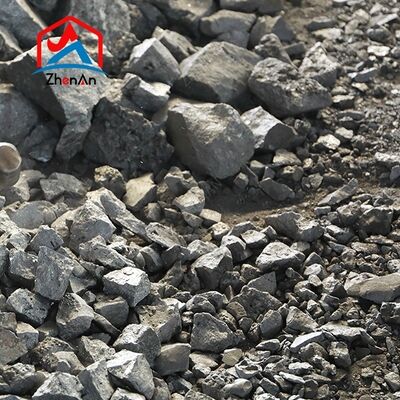
| Material: | Ferro Silicon Magnesium | Color: | Gray |
|---|---|---|---|
| Chemical Compostion: | Si Fe Al S P | Shape: | Lump |
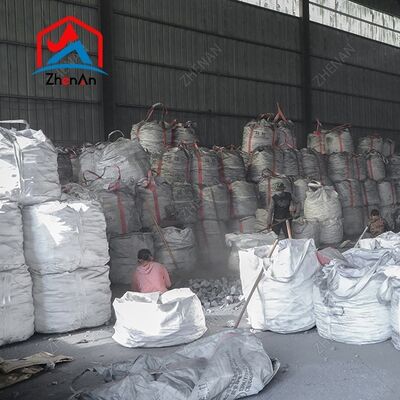
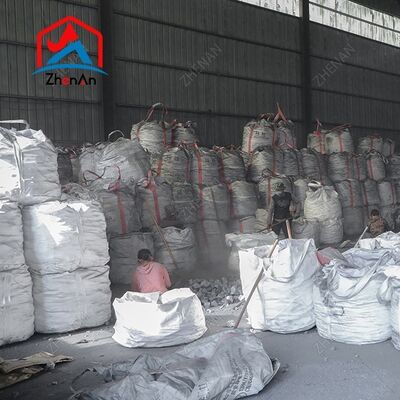
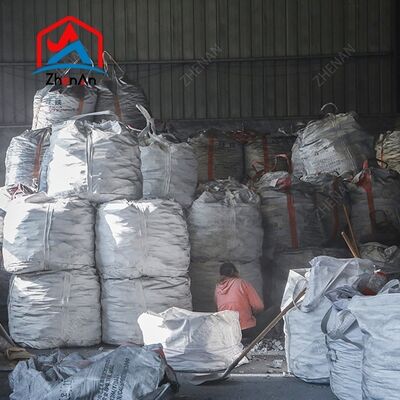
| Packing: | In 1MT Big Bags | Application: | Steel Making |
| Highlight: | FeSiMg 5% Nodular Cast Iron,FeSiMg 7% Foundry Treatment,Ferro Silicon Magnesium Lump Granules |
||
The form of the FeSiMg alloy determines how it meets the molten iron. FeSiMg 5% 7% lump is dropped, plunged, or packed into a pocket and dissolves over seconds; granules are metered, blown, or fed into a stream and dissolve almost instantly. A plant that treats in a ladle wants lump, because a coarse piece sinks through the slag and works at depth. A plant that treats in the mould or in the pouring stream wants granules, because a fine, dry particle reacts exactly where the metal is. Choosing between them is a question about the treatment station, not about price per tonne.
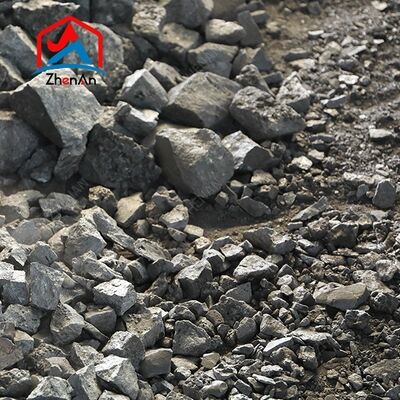
Lump arrives as broken cast cake, screened to a stated cut. A 10–50 mm cut is the usual charge for a plunger bell; 5–20 mm suits a smaller ladle or a hand-shovelled pocket. The pieces are dense, angular, and free of dust when fresh, and they can be weighed by the bag on a floor scale.
Granules are the same alloy crushed finer and screened to 1–5 mm or 0.25–2 mm. They flow, so they can be metered by volume, blown through a lance, or dispensed into a mould pocket. The trade-off is surface area: a granule carries far more surface per kilogram than a lump, so it picks up moisture and loses magnesium faster in storage. Granules should be used from a sealed bag, and a bag that has been open for a week should not be relied upon for a critical heat.
Dosing differs with the form as well. A cored-wire line typically runs 0.5–0.9% alloy by weight against a base sulphur below 0.02%, while a sandwich pocket uses 1.0–1.5% of the melt weight to reach the same residual magnesium.
| Form | Fraction | Packing | Best Fit |
|---|---|---|---|
| Lump | 10–50 mm | 25 kg bag or 1000 kg jumbo bag | Plunger and bell treatment, large ladles |
| Lump | 5–20 mm | 25 kg bag | Smaller ladles, hand-charged pockets |
| Granules | 1–5 mm | 25 kg bag | In-mould and stream treatment, metered feed |
| Granules | 0.25–2 mm | 25 kg bag | Fine dispersion, small mould pockets |
The chemistry behind those fractions follows the GB/T 4138-2015 grade windows. The 5% family runs 4.0–6.0% magnesium as FeSiMg5Re2, with 1.0–3.0% rare earth, silicon at the 45.0% minimum, 2.0–3.0% calcium, and aluminium at or below 1.0%. The 7% family runs 6.0–8.0% magnesium as FeSiMg7Re1 or FeSiMg7Re3, with rare earth at 0.5–1.5% or 2.0–4.0% respectively, the same silicon floor, and calcium at 1.0–1.5% or 2.0–3.5%. Iron balances both, and typical delivery runs 45–48% silicon.
The point of listing fractions beside chemistry is that the two are bought together. A 7% granule and a 7% lump share a certificate but not a dissolution rate, and a plant that changes form without changing its charge calculation will see a different residual on the first heat.
A foundry making both heavy and small work often keeps two forms in stock: lump for the ladle station and granules for the in-mould line. That is a stock decision as much as a metallurgical one, because granules age faster in an open bag.
| Point to Settle | What a Good Answer Looks Like |
|---|---|
| Magnesium band | A range such as 4.0–6.0% or 6.0–8.0%, stated on the certificate |
| Fraction | Millimetres, with a rule for oversize and fines |
| Form | Lump or granules, named per shipment |
| Rare earth level | Re1 or Re3, chosen against the charge quality |
| Packing | 25 kg bag or 1000 kg jumbo bag, matched to the crane |
| Delivery | 7–14 days from advance payment, in writing |
| Documentation | Lot certificate plus the sampling method |
Order sheets that name only "FeSiMg" leave the supplier to choose the form, and the first sign of a wrong choice is a treatment that behaves differently from the trial.
The chemistry is the same; the difference is surface area and storage life, not strength.
Crushing generates fines and exposes fresh surfaces to air. Most plants find it cheaper to buy the screened fraction.
1–5 mm is the common choice; 0.25–2 mm where the pocket is small and the dose is low.
The dose may be buried too deep, the particle may be damp, or the pocket may be filling too slowly to reach reaction temperature.
Yes on small heats; on heavy sections the reserve is thin.
First in, first out, with granules kept sealed and lump kept dry under cover.
Tell ZhenAn which form the station uses, the fraction, the magnesium band, and the tonnage per month, and send it to sales@zaferroalloy.com.
If a trial heat is already booked, the WhatsApp desk on +86 15518824805 can confirm stock and the shipment date in one exchange.
The reply states the form, the packing split, and the earliest shipment after the deposit, and it flags any fraction that would need a different screen than the one your station uses.
Contact Person: Mr. xie