logo
Home ProductsFerro Silicon Magnesium

Silicon Magnesium Nodulizer for Cast Iron Production Graphite Spheroidization and Foundry Applications

I'm Online Chat Now

Silicon Magnesium Nodulizer for Cast Iron Production Graphite Spheroidization and Foundry Applications

Silicon Magnesium Nodulizer for Cast Iron Production Graphite Spheroidization and Foundry Applications
Silicon Magnesium Nodulizer for Cast Iron Production Graphite Spheroidization and Foundry Applications Silicon Magnesium Nodulizer for Cast Iron Production Graphite Spheroidization and Foundry Applications Silicon Magnesium Nodulizer for Cast Iron Production Graphite Spheroidization and Foundry Applications Silicon Magnesium Nodulizer for Cast Iron Production Graphite Spheroidization and Foundry Applications Silicon Magnesium Nodulizer for Cast Iron Production Graphite Spheroidization and Foundry Applications

Large Image :  Silicon Magnesium Nodulizer for Cast Iron Production Graphite Spheroidization and Foundry Applications

Product Details:
Place of Origin: China
Brand Name: ZHENAN
Certification: ISO9001:2015
Model Number: FeSiMg 3-8
Payment & Shipping Terms:
Minimum Order Quantity: Negotiable
Price: Negotiable
Packaging Details: 1MT big bag or as per customer request
Delivery Time: 7-10 work days after received the payment
Payment Terms: L/C,T/T,Western Union
Supply Ability: 2000MT/per Month

Silicon Magnesium Nodulizer for Cast Iron Production Graphite Spheroidization and Foundry Applications

Description
Material: Ferro Silicon Magnesium Color: Gray
Chemical Compostion: Si Fe Al S P Shape: Lump
Packing: In 1MT Big Bags Application: Steel Making
Highlight:

Silicon Magnesium Nodulizer for Cast Iron

,

Graphite Spheroidization Foundry Nodulizer

,

Ferro Silicon Magnesium Alloy

How a Silicon Magnesium Nodulizer Works in Cast Iron

A nodulizer is judged by one result: graphite that grows as spheres instead of flakes. Silicon magnesium nodulizer achieves this because magnesium has a stronger affinity for sulphur and oxygen than for iron, clearing the melt before it can influence graphite. The silicon carrier makes the addition practical — it lowers the melting range and lets the magnesium enter the iron gradually. Foundries that treat cast iron daily treat the nodulizer as a process input rather than a commodity: the same grade, the same fraction, and the same certificate format, heat after heat.

What Distinguishes One Silicon Magnesium Nodulizer Lot from Another

Grade names look alike and behave differently. The published list runs from FeSiMg5Re2 through FeSiMg6Re1 and FeSiMg7Re1 to FeSiMg7Re3, FeSiMg8Re3, FeSiMg8Re5, FeSiMg8Re7 and FeSiMg10Re7. Magnesium climbs across that list from 4.0–6.0% to 9.0–11.0%, and rare earth climbs from 0.5–1.5% to 6.0–8.0%. Two lots with the same name can still differ inside the window, so the receiving check is the certificate plus a fracture inspection, not the label.
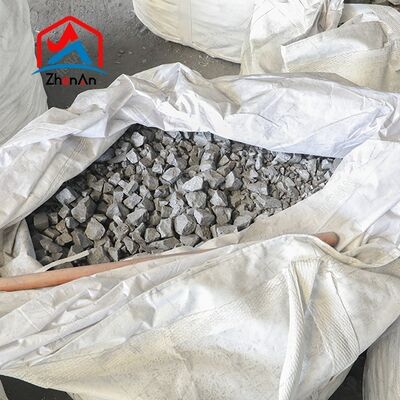
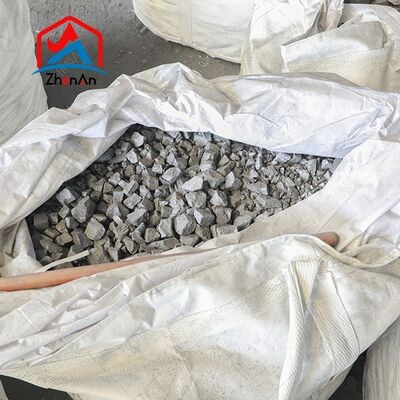
Physical condition separates good lots from tired ones. Fresh material has a clean grey break, sharp edges and little dust. Material that has absorbed moisture shows a dull surface, white patches and crumbling corners, and it will lose magnesium before it reaches the bath. Bags should stay closed until the heat is ready, and the store should be dry and free of floor damp.
Recovery is set by the station rather than by the label. A covered tundish typically returns 40–60% of the magnesium, sandwich practice 25–45%, and cored-wire injection 50–75%, with the remainder leaving as vapour and slag. A supplier who can name the recovery band for your method is easier to hold to a dosing figure.

Chemistry of a Silicon Magnesium Nodulizer
ElementLower limitUpper limitTypical positionRole in treatment
Magnesium4.0%11.0%Set by grade, not by lotNodulizing and desulphurizing agent
Silicon45.0%48% typicalAbove the GB/T 4138-2015 floorCarrier that controls dissolution
Calcium1.0%3.5%Higher on rare earth gradesDeoxidation support, reaction control
Rare earth0.5%8.0%Rises with the grade numberTramp element buffering, nodule stability
Aluminium—1.0%Kept at the ceilingRestricted to limit inclusions
IronBalanceBalanceBase metalDiluent of the alloy

The table is a map of the family, not a substitute for the grade you ordered. A 5% nodulizer and a 10% nodulizer both satisfy the silicon column and both sit under the aluminium ceiling, yet they are not interchangeable in a ladle. Match the magnesium band to the heat, then check the certificate against the band.

Foundry Applications for Silicon Magnesium Nodulizer

The obvious user is the ductile iron foundry, but the same alloy appears in several places along the casting route.

  • Ladle treatment for general jobbing work, where the alloy is plunged under a bell or dropped into a pocket.
  • In-mould and in-stream treatment, where a measured granule dose reacts as the metal fills the mould.
  • Pipe and fitting production, where long runs demand a stable residual heat after heat.
  • Heavy section casting, where magnesium has to survive a slow freeze.
  • Ductile iron ingot moulds and mill housings, where section thickness is measured in hundreds of millimetres.

Each route changes the fraction more than the chemistry. A plunger station wants coarse lump; an in-mould pocket wants a fine, dry granule that flows through a dispenser.

What a Foundry Should Verify Before Buying a Nodulizer
  • Grade and magnesium band written as a range on the purchase order.
  • Fraction in millimetres, with the acceptance rule for oversize and fines.
  • Rare earth level, particularly where the charge carries tramp elements.
  • Certificate per lot, with the sampling method named.
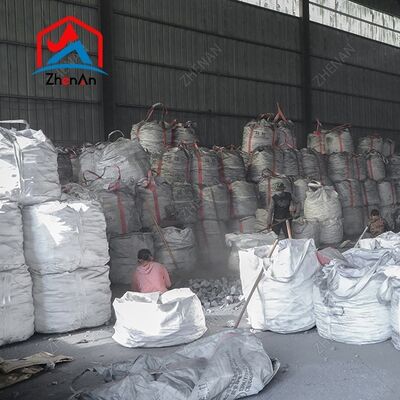
  • Packing that matches the handling equipment — 25 kg bags or 1000 kg jumbo bags.
  • Delivery clock understood as 7–14 days from advance payment.

Add one more check that costs nothing: ask for the previous three lot certificates before the first shipment. A supplier whose windows drift from lot to lot will show it there.

Frequently Asked Questions About Silicon Magnesium Nodulizer
Q: What does the number in the grade name mean?

The first figure tracks magnesium and the second tracks rare earth; FeSiMg7Re3 sits around 6–8% magnesium with 2–4% rare earth.

Q: Is a nodulizer the same as an inoculant?

No. The nodulizer supplies magnesium to change graphite shape; the inoculant adds nucleation sites afterwards. They are bought and dosed separately.

Q: Why does residual magnesium drop during pouring?

Magnesium oxidizes and vaporizes at the bath surface. Long holding, thin slag cover and high temperature all accelerate the loss.

Q: Can fines be used in a plunger station?

They can, but they burn at the surface. Save the fine fraction for in-mould work.

Q: What packing is usual for export?

25 kg woven bags inside a jumbo bag, or straight 1000 kg jumbo bags, both palletized.

Q: How is the alloy stored on site?

Closed bags on pallets, dry floor, away from the furnace door.

Q: Do you provide a certificate with each container?

Yes, per lot, with the chemistry windows stated element by element.

How to Request a Silicon Magnesium Nodulizer Quote

Write to sales@zaferroalloy.com with the foundry's treatment method, the grade under consideration and the tonnage expected per month.
If the line is waiting on a decision, the WhatsApp desk at +86 15518824805 will confirm availability and the shipment date.
ZhenAn quotes against the published grade table, so the magnesium band in the offer is the band the certificate will show.

Contact Details
Zhenan Metallurgy Co., Ltd

Contact Person: Mr. xie

Send your inquiry directly to us (0 / 3000)