|
Product Details:
|
| Material: | Ferro Silicon Magnesium | Color: | Gray |
|---|---|---|---|
| Chemical Compostion: | Si Fe Al S P | Shape: | Lump |
| Packing: | In 1MT Big Bags | Application: | Steel Making |
| Highlight: | Magnesium Ferrosilicon 6% Lump,Ferrosilicon 7% for Nodular Cast Iron,Ferro Silicon Magnesium Foundry Spheroidization |
||
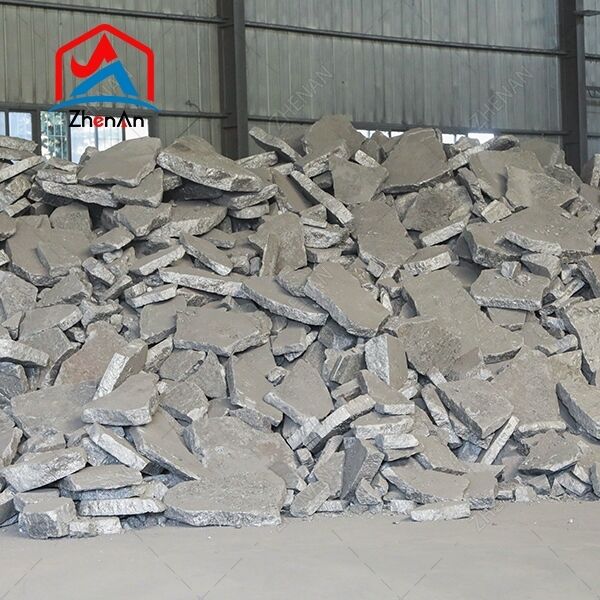
A foundry that runs one plunger station and pours everything from thin covers to thick frames usually settles on a single family of alloy: magnesium ferrosilicon 6% 7% lump. The two magnesium levels are close enough to share a treatment routine and far enough apart to cover both ends of the section range. In the ladle, the lump sinks through the slag, dissolves in the iron and hands magnesium to the melt; the magnesium then attacks sulphur and oxygen before they can form nodules. What the buyer is really choosing is how much of that element survives the trip from the bag to the mould, and how evenly it arrives heat after heat.
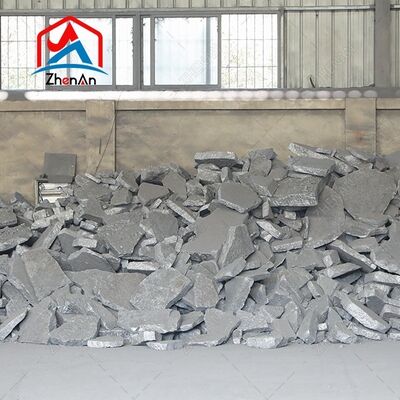
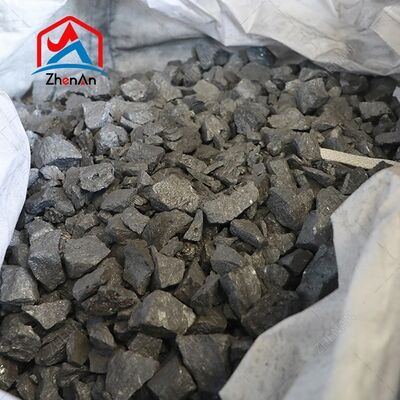
Lump is not a single size. The cast alloy is broken and passed over screens, and the fraction a plant receives is the fraction it ordered. For 6% 7% material the common cuts are 10–50 mm for bell and plunger work, 5–20 mm for medium ladles and 10–30 mm where the charging bucket is small. A good lot shows a fresh grey fracture, minimal fines and no dust clinging to the bag wall.
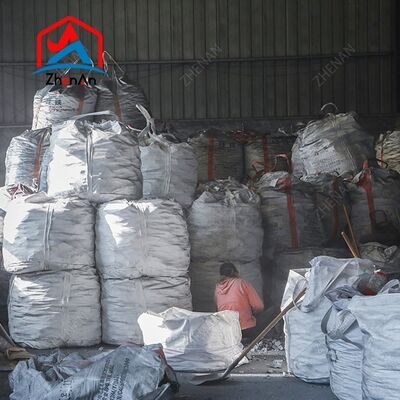
Weight goes into 25 kg woven bags for manual charging, or into 1000 kg jumbo bags where a crane or hopper does the lifting. Both formats are palletized for container loading, and both should be stored dry: a bag that has taken water oxidizes at the surface, and the white bloom that follows is often mistaken for a different grade. Dosing follows the station: 1.0–1.5% of the melt weight in sandwich practice, 0.8–1.2% where a covered ladle controls the reaction. Delivery on this site is quoted at 7–14 days from advance payment, which matters when the treatment station is already running.
| Grade | Mg (%) | Re (%) | Si (%) | Ca (%) | Al (%) |
|---|---|---|---|---|---|
| FeSiMg6Re1 | 5.0–7.0 | 0.5–1.5 | 45.0 min | 2.0–3.0 | 1.0 max |
| FeSiMg7Re1 | 6.0–8.0 | 0.5–1.5 | 45.0 min | 1.0–1.5 | 1.0 max |
| FeSiMg7Re3 | 6.0–8.0 | 2.0–4.0 | 45.0 min | 2.0–3.5 | 1.0 max |
The table follows the GB/T 4138-2015 windows for light rare earth FeSiMg, with silicon shown as the 45.0% minimum the standard sets and normal delivery at 45–48%. It also shows why "6%" and "7%" are shorthand rather than exact figures. FeSiMg6Re1 sits at 5.0–7.0% magnesium and FeSiMg7Re1 at 6.0–8.0%; the names describe the middle of the window, not the top. Rare earth is the second variable: Re1 material carries 0.5–1.5%, while Re3 material carries 2.0–4.0% and costs more. Choose Re3 when the charge is dirty or the scrap mix brings in tramp elements that would otherwise consume magnesium; choose Re1 when the charge is clean and the treatment is stable.
The alloy is used wherever ductile iron is made in a ladle rather than in a converter. Jobbing shops treat one heat at a time and pour by hand; captive lines treat on a schedule and pour into automated moulds. Both want the same things from the lump: predictable solution, low fines and a magnesium level that does not need a second correction.
An order sheet that lists only grade and tonnage leaves the two decisions that cause most claims — fraction and rare earth level — to the supplier's default.
The 7% window leaves more magnesium for a slow pour, but the gain only shows when the section is genuinely thick. On medium work the 6% level is usually enough.
Surface oxidation from damp storage, or fines left from screening. Check the bag lining and the store roof before blaming the alloy.
Yes, though small cuts carry more surface per tonne and lose magnesium faster in the ladle.
That follows from base sulphur, treatment temperature and the target residual. The supplier can advise, but the number has to be confirmed on your own heats.
Samples are available; the freight is normally paid by the buyer.
Jumbo bags fill a container faster; 25 kg bags suit plants without a crane.
Terms are agreed per order, with T/T and letter of credit both accepted.
WhatsApp +86 15518824805 is the quickest route to the desk when a treatment trial is waiting on a price.
For a formal enquiry, write to sales@zaferroalloy.com with the grade, the fraction, the tonnage and the port.
ZhenAn answers with the magnesium window that matches the request, the certificate format and a delivery date counted from advance payment.
Contact Person: Mr. xie