logo
Home ProductsFerro Silicon Magnesium

Silicon Magnesium FeSiMg 5% 6% for Ductile Iron Production and Graphite Nodularization

I'm Online Chat Now

Silicon Magnesium FeSiMg 5% 6% for Ductile Iron Production and Graphite Nodularization

Silicon Magnesium FeSiMg 5% 6% for Ductile Iron Production and Graphite Nodularization
Silicon Magnesium FeSiMg 5% 6% for Ductile Iron Production and Graphite Nodularization Silicon Magnesium FeSiMg 5% 6% for Ductile Iron Production and Graphite Nodularization Silicon Magnesium FeSiMg 5% 6% for Ductile Iron Production and Graphite Nodularization Silicon Magnesium FeSiMg 5% 6% for Ductile Iron Production and Graphite Nodularization Silicon Magnesium FeSiMg 5% 6% for Ductile Iron Production and Graphite Nodularization

Large Image :  Silicon Magnesium FeSiMg 5% 6% for Ductile Iron Production and Graphite Nodularization

Product Details:
Place of Origin: China
Brand Name: ZHENAN
Certification: ISO9001:2015
Model Number: FeSiMg 3-8
Payment & Shipping Terms:
Minimum Order Quantity: Negotiable
Price: Negotiable
Packaging Details: 1MT big bag or as per customer request
Delivery Time: 7-10 work days after received the payment
Payment Terms: L/C,T/T,Western Union
Supply Ability: 2000MT/per Month

Silicon Magnesium FeSiMg 5% 6% for Ductile Iron Production and Graphite Nodularization

Description
Material: Ferro Silicon Magnesium Color: Gray
Chemical Compostion: Si Fe Al S P Shape: Lump
Packing: In 1MT Big Bags Application: Steel Making
Highlight:

FeSiMg 5% for ductile iron

,

FeSiMg 6% graphite nodularization

,

Ferro Silicon Magnesium alloy

Why Ductile Iron Plants Choose FeSiMg 5% and 6% for Graphite Nodularization

Ductile iron earns its strength from graphite that solidifies as nodules rather than flakes, and that shape change starts with magnesium. Pure magnesium is too reactive to drop into an open ladle, so foundries take the element inside a ferrosilicon carrier: FeSiMg 5% and 6% release magnesium as the alloy dissolves, at a rate the operator can follow. The 5% window suits thin-section work, low-sulphur base iron and small heats where an overshoot is expensive to correct. The 6% window keeps magnesium in reserve for heavy sections, higher-sulphur scrap and longer holding before pouring. ZhenAn holds both windows as lump and as screened granules, and each lot leaves with chemistry matched to the grade table below.

What FeSiMg 5% and 6% Look Like in the Bag and on the Floor

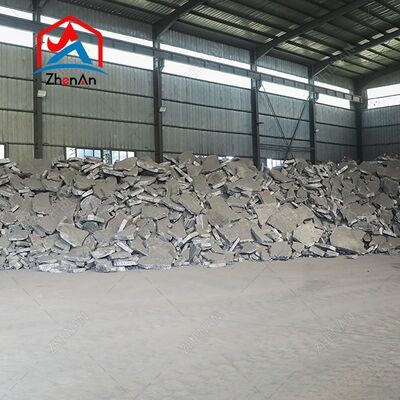
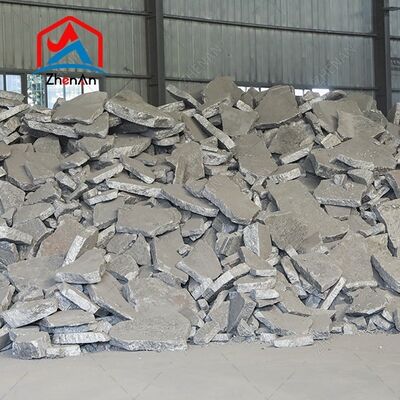
Both levels arrive as silver-grey lump with a bright crystalline fracture and no slag skin on the broken face. The alloy is brittle, so it breaks along clean planes and keeps its screened fraction through bagging, transport and the drop into a treatment vessel. Foundries running bell or plunger stations normally take 10–50 mm lump; smaller ladles and in-stream feeding work better with 5–20 mm or granules from 0.25–2 mm to 1–5 mm. Packaging follows the plant: 25 kg woven bags on pallets, or 1000 kg jumbo bags where a crane feeds the hopper. Keep the stock under cover, because damp bags promote surface oxidation and crumbling, and a weathered lot reads as an old lot on the floor.

FeSiMg 5% and 6% Chemical Windows a Foundry Should Specify
ElementFeSiMg 5% windowFeSiMg 6% windowDuty in the melt
Magnesium (Mg)4.0–6.0%5.0–7.0%Nodule nucleation and desulphurization driving force
Silicon (Si)38–44%38–44%Carrier phase, keeps alloy melting below bath temperature
Calcium (Ca)2.0–3.0%2.0–3.0%Assists deoxidation and stabilizes the reaction
Rare earth (Re)1.0–3.0%0.5–1.5%Buffers tramp elements and supports nodule count
Aluminium (Al)1.0% max1.0% maxKept low to limit inclusions
Iron (Fe)BalanceBalanceBase of the carrier alloy

Those windows come from the grade table published on this site, and they are written as ranges on purpose: a single magnesium figure cannot describe a treatment alloy. Ask for a lot certificate that repeats every window element by element, then compare it with the charge weight you actually calculated. If a supplier quotes only "Mg 6%" with no silicon, calcium or rare earth line, the certificate will not tell you whether a treatment change came from the alloy or from the practice.

Where FeSiMg 5% and 6% Earn Their Cost in a Ductile Iron Shop

The clearest case for the 5% level is a thin-wall job with a clean charge: brake hardware, small valve bodies, thin covers and parts that are poured within minutes of treatment. Magnesium fades as the heat waits, so an alloy with less headroom loses less when the pouring line slows down. The 6% level belongs on heavier work, where the section takes longer to solidify and the residual has to survive a deep mould.

  • Heavy machine bases and frames, where the last metal out of the ladle still has to nodularize.
  • Jobs charged with high-sulphur pig iron or oily returns, which consume magnesium before it reaches the mould.
  • Shops that treat one large ladle and pour several moulds from it.
  • Foundries switching between thin and heavy work on the same line, where one 6% alloy covers both ends.
What a Buyer Should Settle Before an FeSiMg 5% and 6% Inquiry Goes Out

Four numbers decide the quote: the magnesium window, the screened fraction, the tonnage per shipment and the packing. Add the base iron sulphur level and the treatment method, because both change how much alloy the heat needs, and a supplier who knows them can flag a mismatch before the container ships. Confirm whether the certificate should follow the lot or the shipment, and whether a retained sample is expected. Delivery on this site is stated as 7–14 days from receipt of advance payment, so a plant running a tight treatment schedule should place the order against that clock rather than against the day the vessel sails. Payment terms are usually agreed per order, with T/T and letter of credit both in use.

Frequently Asked Questions About FeSiMg 5% and 6%
Q: Can the two levels be mixed in one ladle?

They can, but the result is a magnesium window nobody recorded. Treat one grade per heat and keep the bag labels visible.

Q: Why does my residual magnesium swing between heats?

Usually the alloy is not the cause. Check base sulphur, treatment temperature, the amount of alloy actually weighed and how long the heat waits before pouring.

Q: Is 5% enough for a heavy section?

Only if the section is modest and the pour is quick. For thick walls, the reserve in a 6% alloy is cheaper than a re-treatment.

Q: How fine can the granules go?

Fractions down to 0.25–2 mm are supplied; below that, fines tend to float and burn rather than dissolve.

Q: Does rare earth content matter at these magnesium levels?

It matters more with dirty charge materials. The rare earth line is on the certificate, so read it instead of assuming.

Q: How is the alloy weighed on site?

By the bag on a floor scale, or by a hopper feed where the station is automated. Either way, log the weight against the heat number.

How to Request a Quotation for FeSiMg 5% and 6%

Send the magnesium window, the fraction, the monthly tonnage and the packing you want to sales@zaferroalloy.com.
If the decision is urgent, message the desk on WhatsApp +86 15518824805 with the same four lines and a delivery port.
ZhenAn replies with the grade that fits the window, the certificate format and the lead time that applies to your quantity.

Contact Details
Zhenan Metallurgy Co., Ltd

Contact Person: Mr. xie

Send your inquiry directly to us (0 / 3000)