|
Product Details:
|
| Vanadium Content: | 78-82% | Melting Point: | 1887ºC |
|---|---|---|---|
| Boiling Point: | 3337ºC | Form: | Lump / Solid Alloy |
| Size Range: | 10-50 Mm | Main Composition: | Fe + V |
| Highlight: | Ferro Vanadium Lump FeV50,FeV80 alloy for steel foundries,Ferro Vanadium metallurgical processing |
||
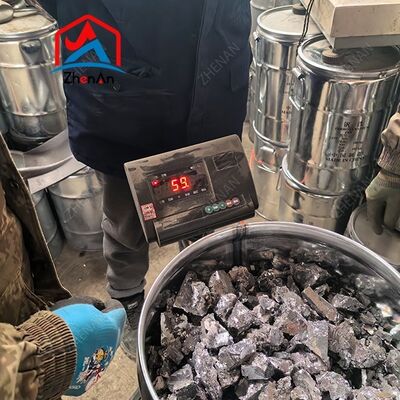
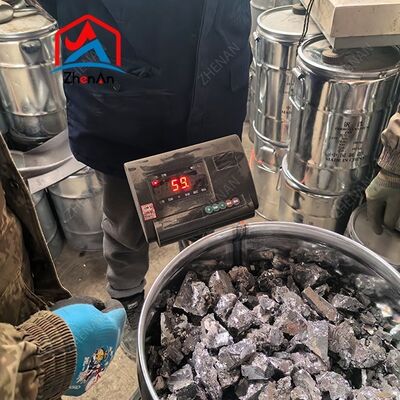
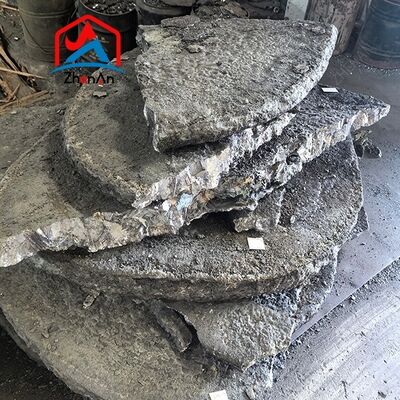
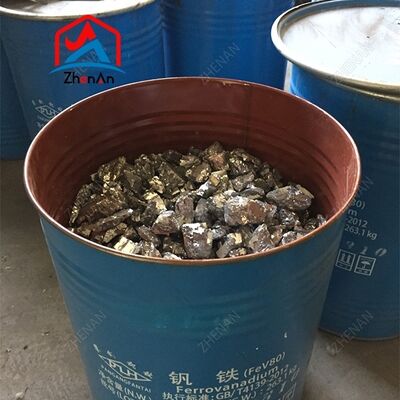
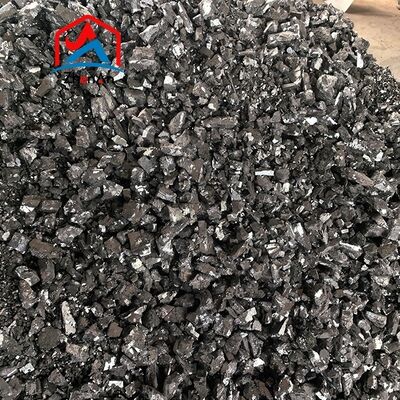
A foundry cannot call the mill when a heat needs vanadium — the addition has to be in the charge bin, ready. Ferro vanadium lump answers that need: dense pieces that sink through the slag and dissolve into iron or steel melts, delivering the vanadium that hardens castings, stabilizes pearlite in iron, and refines grain in steel. ZhenAn's foundry program pairs the FeV50 and FeV80 grades in lump form, so alloy production runs from economical vanadium loads up to concentrated additions without changing suppliers.
The lump arrives in 1 MT big bags at the standard 10–50 mm fraction — a size a foundry can charge with the same gear it uses for ferro silicon and charge chrome. Storage is ordinary dry alloy storage; the safety data sheet ships with each lot and spells out handling notes. The Henan works behind the program holds ISO 9001:2015, sustains 2000 MT of monthly capacity, dispatches in 7–10 work days after payment, and accepts L/C, T/T and Western Union.
Both grades anchor to GB/T 4139-2012. FeV50-A carries vanadium at 48.0–55.0% with carbon capped at 0.40%, silicon 2.0%, phosphorus 0.06%, sulfur 0.04% and aluminum 1.5%. FeV80-A lifts vanadium to 78.0–82.0% and tightens the rest — carbon 0.15%, silicon 1.5%, phosphorus 0.05%, sulfur 0.04%, aluminum 1.5%, manganese 0.50%. Iron balances both. Foundries running gray or ductile iron often find the 50% grade enough for their vanadium levels, while steel foundries pouring wear and tool grades move to the 80% material for its concentrated vanadium and low carbon.
| Element | FeV50-A | FeV80-A |
|---|---|---|
| Vanadium (V) | 48.0–55.0% | 78.0–82.0% |
| Carbon (C) | 0.40% max | 0.15% max |
| Silicon (Si) | 2.0% max | 1.5% max |
| Phosphorus (P) | 0.06% max | 0.05% max |
| Sulfur (S) | 0.04% max | 0.04% max |
| Aluminum (Al) | 1.5% max | 1.5% max |
| Manganese (Mn) | — | 0.50% max |
| Iron (Fe) | Balance | Balance |
In cast iron, vanadium forms carbides that stabilize pearlite and lift hardness and wear response — the mechanism behind rolls, wear liners and crushing components. In steel castings, it refines the solidified structure and adds strength without the section thickening that carbon alone would need. Alloy production shops also use FeV as the vanadium unit when blending master alloys for their own product lines, where the COA becomes the input record for their certificates.
Q: Which grade serves gray iron best?
The 50% grade covers most iron-foundry vanadium levels economically.
Q: When does a steel foundry need FeV80?
For wear-resistant and tool steel castings with real vanadium content and low carbon ceilings.
Q: How does lump behave in the charge?
It sinks and dissolves like other dense ferroalloys; recovery follows normal foundry practice.
Q: What packing comes standard?
1 MT big bags; other arrangements on request.
Q: How fast can a repeat order land?
7–10 work days from cleared payment.
Q: Are COA and SDS available?
Both ship with every lot as standard.
Q: Can documentation support PPAP-style files?
The COA format and quality system certification support most foundry documentation needs.
Foundries usually start with the grades they pour and the vanadium those grades carry, then let the desk translate that into a grade split and delivery plan. Either route lands with the alloy desk: the mailbox sales@zaferroalloy.com takes formal requests, while +86 15518824805 carries a running conversation — coverage runs 8:00 to 23:00, Beijing time.
Contact Person: Mr. xie