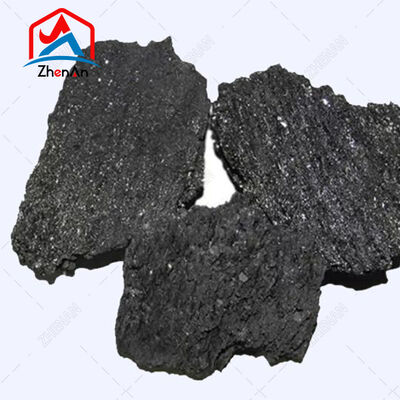
Metallurgical Silicon Carbide for Steelmaking and Foundry Applications
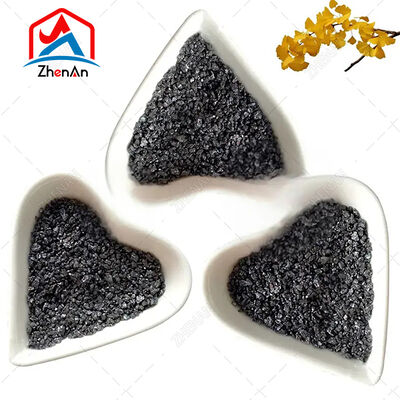
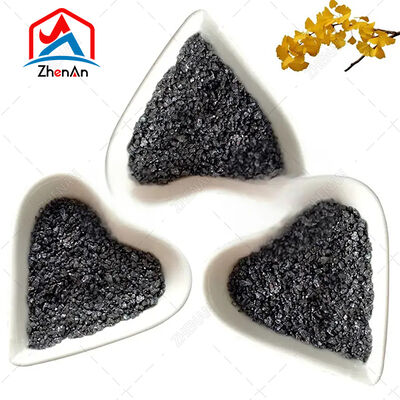
Metallurgical Silicon Carbide serves as a combined source of silicon and carbon in iron and steel production. Available in various grades and forms, SiC is utilized for steel deoxidation, carbon adjustment, silicon addition, cast-iron treatment, and furnace processing.
Product Specifications
| Item |
SiC 70% |
SiC 75% |
SiC 80% |
| Product |
Metallurgical Silicon Carbide |
Metallurgical Silicon Carbide |
Metallurgical Silicon Carbide |
| SiC Grade |
70% |
75% |
80% |
| Form |
Grain, granule, pellet or other agreed form |
Grain, granule, pellet or other agreed form |
Grain, granule, pellet or other agreed form |
| Main Function |
Si and C addition, metallurgical treatment |
Si and C addition, deoxidation |
Si and C addition, deoxidation |
| Steelmaking |
Applicable |
Applicable |
Applicable |
| Foundry |
Applicable |
Applicable |
Applicable |
| Molten Metal Treatment |
Applicable |
Applicable |
Applicable |
The exact physical form and particle size should be selected according to furnace type and treatment method.
Chemical Composition
The SiC percentage serves as the principal grade identifier. Metallurgical SiC is supplied across different purity levels according to end-use requirements. For procurement, chemical specifications should separately identify SiC content and relevant impurities such as free carbon, oxides, iron, sulfur, phosphorus, and moisture where these parameters are controlled.
Size and Form
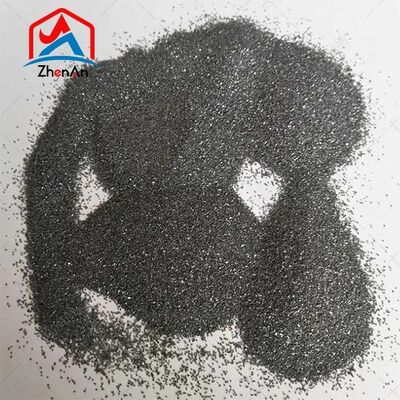
Metallurgical SiC is commercially supplied in various physical forms. Typical metallurgical grain sizes include 0-10 mm and 1-10 mm, while larger 10-50 mm material is also available for specific applications. Form and size significantly affect charging behavior, distribution, and reaction time in the furnace.
Product Characteristics and Functions
Silicon and Carbon Addition
SiC supplies both silicon and carbon, allowing one metallurgical material to contribute to two essential elements required for melt chemistry adjustment.
Deoxidation
Metallurgical SiC is used for deoxidation in steelmaking and participates in silicon-based oxygen removal reactions.
Foundry Treatment
In cast-iron production, SiC contributes silicon and carbon and is associated with preconditioning and nucleation effects. Research on ductile iron melting has examined SiC as a source for adjusting C and Si in the melt.
Molten Metal Treatment
SiC can be introduced during furnace charging or molten-metal treatment depending on the metallurgical process requirements.
Applications
- Steelmaking: Used for deoxidation, silicon adjustment, carbon addition, and selected furnace-treatment processes
- Foundry Production: Used in gray, ductile, and other cast-iron production where both silicon and carbon adjustment are required
- Electric Furnace Treatment: SiC is used in induction and electric-furnace processes and can be added to the charge or molten metal
- Molten Metal Conditioning: The combined Si/C contribution makes SiC relevant to molten-metal conditioning and pre-treatment
Technical Information Requirements
Buyers should define the following specifications:
- SiC content requirements
- Particle size specifications
- Physical form preferences
- Free carbon limits
- Oxide impurity controls
- Sulfur and phosphorus limits where relevant
- Moisture content requirements
- Furnace type and configuration
- Charging method
- Target silicon and carbon levels
Quality and Documentation
The commercial specification should clearly identify the SiC grade, particle size, and relevant impurity requirements. A Certificate of Analysis (COA) may document the chemical analysis of the supplied lot when included in the purchasing agreement. Safety Data Sheets (SDS) and packing information support proper plant handling and transportation.
Frequently Asked Questions
What grades of metallurgical SiC are covered?
This product line covers SiC 70%, SiC 75%, and SiC 80% grades.
What is metallurgical SiC used for?
It serves as a silicon and carbon source for steelmaking, foundry production, deoxidation, and molten-metal treatment applications.
Can SiC be used in cast iron production?
Yes. Metallurgical SiC is widely used in cast-iron production to supply silicon and carbon and for foundry treatment processes.
How do I select between 70%, 75%, or 80% SiC?
Consider target Si and C levels, required SiC input, impurity limits, particle size requirements, and specific furnace practice.


 Your message must be between 20-3,000 characters!
 English