Product Overview
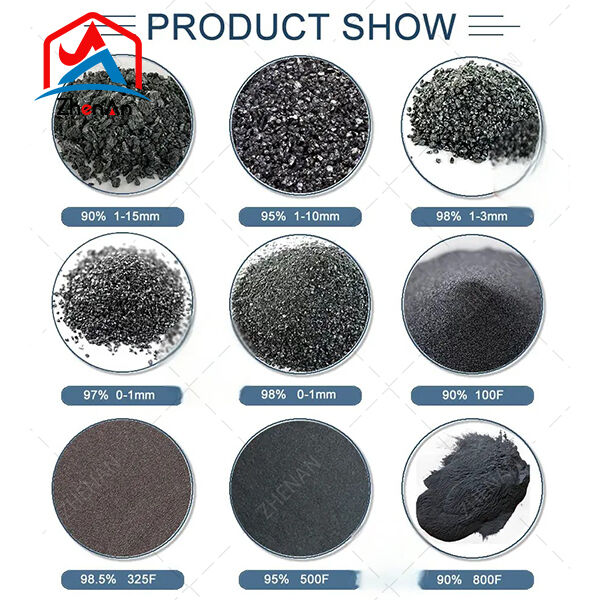
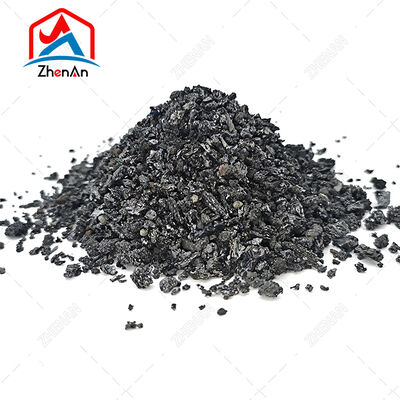
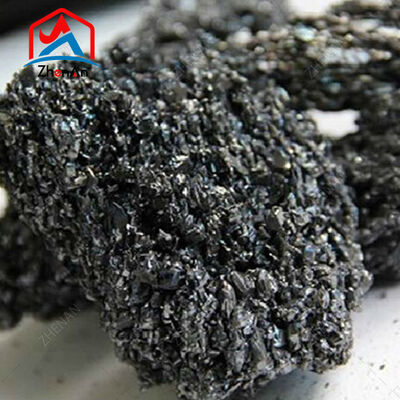
Silicon Carbide 70% and 75% are metallurgical-grade silicon carbide materials used as sources of silicon and carbon in steelmaking and foundry processes. These grades are selected for furnace charging, steel deoxidation, carbon adjustment, cast iron melting and metallurgical treatment where buyers require a balance between SiC content, reaction behavior and material cost.
Product Specifications
| Item |
SiC 70% |
SiC 75% |
| Product |
Metallurgical Silicon Carbide |
Metallurgical Silicon Carbide |
| SiC Content |
70% min. typical |
75% min. typical |
| Free Carbon |
8-10% max. typical |
6-8% max. typical |
| Fe₂O₃ |
4% max. typical |
3-4% max. typical |
| Al₂O₃ |
4% max. typical |
3-4% max. typical |
| Moisture |
0.5% max. typical |
0.5% max. typical |
| Form |
Lump / granular material |
Lump / granular material |
| Common Size |
0-10 mm; larger furnace sizes may also be used |
0-10 mm; larger lump sizes may also be used |
| Color |
Black / dark gray |
Black / dark gray |
| Application |
Steelmaking and foundry metallurgy |
Steelmaking and foundry metallurgy |
These are industry-typical reference specifications, not guaranteed specifications. Public market references report 70% and 75% SiC grades with different free-carbon and impurity ranges depending on producer and application.
Grade Comparison
Silicon Carbide 70%
SiC 70% is generally used where buyers prioritize economical silicon-carbon addition for general metallurgical treatment. It can be used in furnace charging, cast iron production, slag conditioning and selected steelmaking applications.
Silicon Carbide 75%
SiC 75% provides higher SiC content than the 70% grade while remaining within the mid-range metallurgical SiC market. It is commonly considered for steelmaking deoxidation, carbon adjustment and foundry melting where a higher effective SiC content is required.
Available Sizes and Forms
- 0-5 mm
- 0-10 mm
- 1-10 mm
- 10-50 mm for selected furnace charging applications
Lump material is generally selected for direct furnace charging, while smaller granular fractions are used where faster dissolution or more controlled addition is required.
Primary Applications
Steelmaking Deoxidation
SiC acts as a source of silicon and carbon during steel treatment. Its silicon component contributes to deoxidation while carbon supports carbon adjustment.
Carbon Addition
The carbon contained in metallurgical SiC makes it useful where both silicon and carbon additions are required.
Cast Iron Production
SiC is used in electric, induction and cupola furnace operations for cast iron production. It contributes silicon and carbon while supporting melt conditioning and nucleation.
Foundry Furnace Treatment
Foundries use metallurgical SiC during charge preparation or molten-metal treatment depending on furnace type and production practice.
Technical Information
Silicon Carbide provides two important metallurgical components: Silicon supports deoxidation and silicon adjustment, while Carbon supports recarburization and carbon correction. The exothermic behavior of SiC reactions can also contribute heat during suitable steelmaking processes.
Grade Selection Considerations
- Required SiC content
- Target silicon recovery
- Required carbon addition
- Furnace type
- Addition position
- Particle size
- Fe₂O₃ and Al₂O₃ limits
- Moisture
- Required impurity control
Buyer Confirmation Checklist
- Product: Silicon Carbide
- Grade: 70% or 75%
- SiC content
- Free carbon
- Fe₂O₃ and Al₂O₃ limits
- Particle size
- Lump or granular form
- Quantity
- Application
- Furnace type
- Destination port
- Packing requirement
- COA, SDS or inspection requirements
Quality and Documentation
Typical purchasing documentation includes chemical composition, Certificate of Analysis (COA), Safety Data Sheet (SDS), batch information, packing information, and inspection reports when required. The exact document package should be confirmed according to the buyer's import and production requirements.
Packing Options
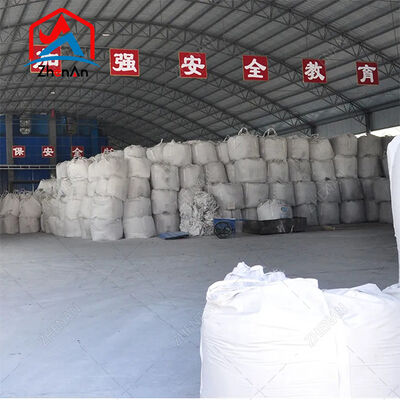
Common industrial packing formats for metallurgical SiC include 25 kg bags and approximately 1 MT jumbo bags. Bulk or other packing formats may be used depending on handling and transportation requirements.
Frequently Asked Questions
What is Silicon Carbide 70% used for?
SiC 70% is used as a silicon-carbon source in metallurgical applications, including steelmaking, foundry melting and furnace treatment.
What is Silicon Carbide 75% used for?
SiC 75% is commonly used for steelmaking deoxidation, carbon adjustment, cast iron production and foundry applications.
What is the difference between SiC 70% and 75%?
The primary difference is SiC content. SiC 75% provides a higher nominal SiC level, while SiC 70% is commonly selected where a lower-cost metallurgical grade is suitable.
What sizes are available?
Common metallurgical sizes include 0-5 mm, 0-10 mm and 1-10 mm. Larger lump sizes can also be used for selected furnace charging processes.
Is SiC suitable for cast iron production?
Yes. Metallurgical SiC is used as a silicon and carbon source in cast iron production and can support melt conditioning and nucleation.
Can SiC replace ferrosilicon?
SiC can provide both silicon and carbon, so it may supplement or replace part of other silicon and carbon additions in suitable processes. The actual substitution ratio depends on furnace practice and recovery.
What documents should buyers request?
Buyers commonly request a COA, SDS, chemical composition, batch information and packing details. Third-party inspection may also be specified.
What information should be provided for quotation?
Provide the required SiC grade, quantity, size, application, furnace type, destination port and packing requirement.
Inquiry and Contact


 Your message must be between 20-3,000 characters!
 English