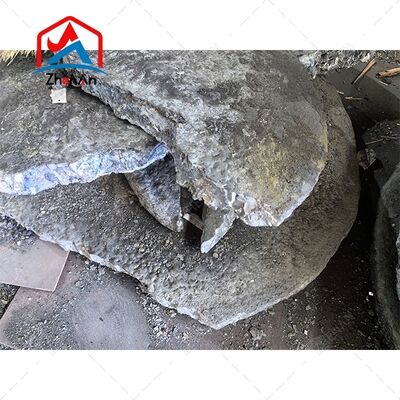
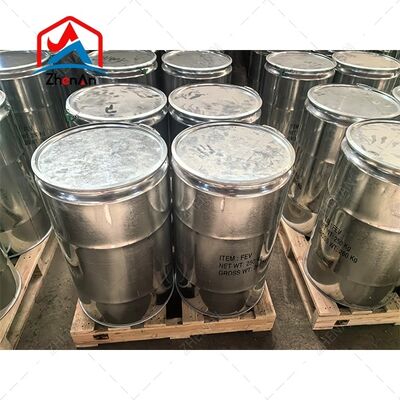
FeV Alloy 50% & 80% Lump for Automotive and Structural Steel
High-strength alloying material specifically designed for automotive steel and structural steel production, providing controlled vanadium addition for enhanced mechanical properties.
Product Introduction
FeV Alloy 50% and 80% are ferrovanadium lump products used as vanadium alloying materials in automotive steel, structural steel and other high-strength steel production. Vanadium contributes to grain refinement and precipitation strengthening in appropriately designed steel compositions, helping steelmakers develop required strength and hardness levels.
FeV50 contains at least 50% vanadium, while FeV80 contains at least 80% vanadium, with iron as the balance. The two grades provide different vanadium concentrations for alloying calculations and can be selected according to target V content, steel grade, melting process and addition rate.
Key Benefits for Steel Production
- Grade Options: FeV50 and FeV80 provide different vanadium concentrations for controlled alloy addition
- High-Strength Steel Compatibility: Suitable for selected high-strength automotive and structural steel grades
- Lump Form: Supplied in lump form for charging into metallurgical processes
- Controlled Chemistry: Enables precise vanadium addition based on required final steel composition
- Custom Specifications: Define V content, impurity limits, lump size, packaging and documentation requirements
FeV50 and FeV80 Specifications
| Item |
FeV50 |
FeV80 |
| Product |
FeV Alloy Lump |
FeV Alloy Lump |
| Vanadium (V) |
≥50% |
≥80% |
| Iron (Fe) |
Balance |
Balance |
| Form |
Lump |
Lump |
| Size |
According to requirement |
According to requirement |
| Carbon (C) |
According to agreed specification |
According to agreed specification |
| Silicon (Si) |
According to agreed specification |
According to agreed specification |
| Manganese (Mn) |
According to agreed specification |
According to agreed specification |
| Phosphorus (P) |
According to agreed specification |
According to agreed specification |
| Sulfur (S) |
According to agreed specification |
According to agreed specification |
| Aluminum (Al) |
According to agreed specification |
According to agreed specification |
| COA |
Available |
Available |
| SDS |
Available |
Available |
Actual chemical limits and lump size should be confirmed against the buyer's steel grade and purchasing specification.
Technical Performance in Steel
Vanadium is used in selected steel compositions to influence microstructure and mechanical properties. During appropriate steel processing, vanadium forms fine carbonitride precipitates that contribute to:
- Grain refinement
- Precipitation strengthening
- Increased yield strength
- Increased hardness
- Microstructural control
For automotive and structural steels, FeV should be selected as part of the overall steelmaking formulation, considering complete steel chemistry, rolling conditions, cooling rate and heat treatment.
Application Areas
Automotive Steel Production
FeV can be used as a vanadium alloying addition in selected high-strength automotive steel grades for components requiring:
- Target yield strength optimization
- Tensile strength enhancement
- Controlled steel chemistry
- Specific vanadium content requirements
- Formability maintenance
Structural Steel Production
Selected high-strength structural steels incorporate vanadium for applications including:
- Building structures
- Bridges and infrastructure
- Industrial structures
- Heavy equipment structures
- Load-bearing components
Grade Selection: FeV50 vs FeV80
| Selection Factor |
FeV50 |
FeV80 |
| Minimum V content |
≥50% |
≥80% |
| V concentration |
Lower |
Higher |
| Automotive steel |
Suitable for selected grades |
Suitable for selected grades |
| Structural steel |
Suitable for selected grades |
Suitable for selected grades |
| Addition quantity |
Relatively higher for same V target |
Relatively lower for same V target |
| Main advantage |
Lower V concentration for controlled addition |
Higher V concentration |
FeV80 is not automatically the better choice. Practical selection should consider contained vanadium, recovery, impurity limits, addition quantity and total alloying cost.
Ordering Requirements
- Steel Grade: Provide the automotive or structural steel grade being produced
- Target Vanadium Content: Specify required V content in final steel
- FeV Grade: Confirm whether FeV50 or FeV80 is required
- Lump Size: Specify according to charging and melting system
- Chemical Composition: Confirm requirements for controlled elements
- Quantity: Provide trial, batch or regular purchase quantity
- Packaging: Specify based on storage and transportation conditions
- Delivery: Provide destination port and required schedule
Product Form & Documentation
FeV Lump: Supplied in lump form for metallurgical alloy addition with specific sizes available.
Packaging: Industrial packaging arranged according to order quantity and transportation requirements.
Quality Documents: COA and SDS provided according to agreed order requirements.
Contact for Quotation


 Your message must be between 20-3,000 characters!
 English