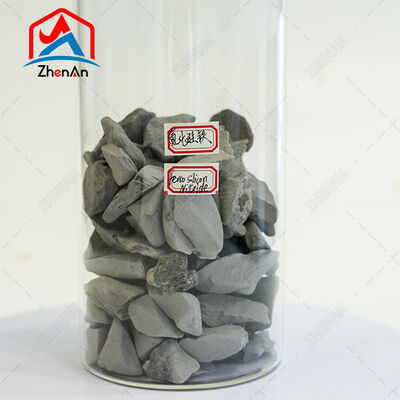
Why Choose FeSiN Supplier for Steelmaking and Refractory Applications?
- High-temperature resistance above 1400°C
- Excellent anti-wear and anti-crack performance
- Dual function: nitrogen alloying + refractory reinforcement
- Consistent bulk supply for large-scale steel plants
- Stable quality to reduce downtime and maintenance costs
What Is Ferro Silicon Nitride and Why Is It Used in Steelmaking?
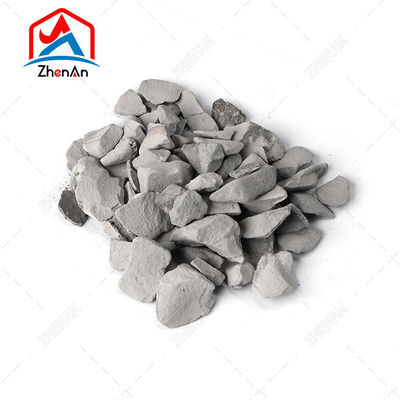
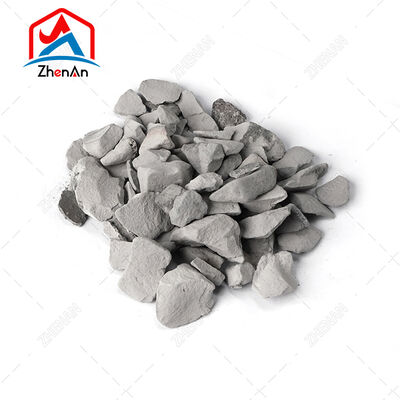
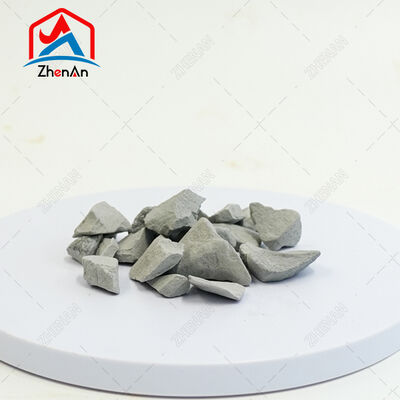
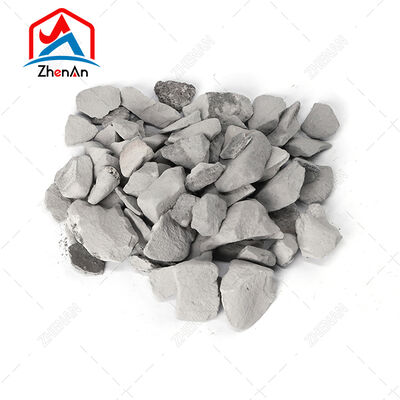
Ferro Silicon Nitride (FeSiN) is a composite alloy made from silicon, nitrogen, and iron, designed for steelmaking and refractory applications. It plays a dual role: acting as a nitrogen alloying agent in molten steel and as a high-performance additive in refractory materials.
In steelmaking, FeSiN enhances the microstructure and improves mechanical strength. In refractory systems, it increases resistance to wear, oxidation, and thermal shock, making it essential for high-temperature industrial environments.
What Are the Standard Specifications of FeSiN?
| Parameter |
Specification Range |
| Silicon (Si) |
40–60% |
| Nitrogen (N) |
20–35% |
| Iron (Fe) |
Balance |
| Carbon (C) |
≤1.5% |
| Particle Size |
10–50 mm / customized |
| Form |
Lump / granule |
| Bulk Density |
2.5–3.2 g/cm³ |
| Application |
Steelmaking / refractory |
How Does FeSiN Improve Wear Resistance in Refractory Materials?
Wear in refractory linings is caused by mechanical friction, molten metal flow, and slag erosion. FeSiN improves wear resistance by forming strong ceramic bonding phases that reinforce the internal structure of refractory materials.
These phases reduce material loss during operation, especially in high-wear zones such as ladles, tundishes, and furnaces. As a result, refractory components maintain their shape and strength for longer periods, reducing replacement frequency.
Why Is FeSiN Suitable for High-Temperature Steelmaking Environments?
FeSiN is highly stable at elevated temperatures, maintaining its structural integrity even under continuous thermal cycling. Its resistance to oxidation prevents degradation in oxygen-rich furnace environments.
Additionally, FeSiN enhances the thermal shock resistance of refractories, allowing them to withstand rapid temperature changes without cracking. This makes it ideal for continuous casting and high-temperature steel production processes.
How Does FeSiN Enhance Steel Quality?
FeSiN contributes to steel quality by introducing nitrogen, which refines the grain structure and improves strength. It also aids in deoxidation through its silicon content, resulting in cleaner steel.
This combination leads to improved mechanical properties such as hardness, toughness, and wear resistance, which are critical for demanding industrial applications.
FeSiN Grade Comparison
FeSiN 30 vs FeSiN 20: Which Grade Is Better for Steelmaking?
FeSiN 30 contains higher nitrogen levels, offering superior strengthening effects and better refractory performance. It is recommended for high-performance steel production and demanding environments.
FeSiN 20 is more economical and suitable for general-purpose applications where cost efficiency is a priority.
FeSiN vs Silicon Nitride: Which Material Should You Choose?
FeSiN provides a balance between cost and performance, making it ideal for bulk industrial use. Its iron content ensures better compatibility with metallurgical processes.
Silicon nitride offers higher purity and ceramic strength but is more expensive and typically used in specialized applications rather than large-scale steelmaking.
FeSiN vs Ferrosilicon: What Are the Key Differences?
Ferrosilicon is mainly used as a deoxidizer and does not provide nitrogen alloying.
FeSiN delivers both silicon and nitrogen, enabling enhanced steel strength, improved refractory durability, and better high-temperature performance, making it a more advanced solution.
What Are the Overall Benefits of Using FeSiN?
FeSiN offers a comprehensive set of advantages:
- improves refractory wear resistance and lifespan
- enhances steel mechanical properties
- increases thermal stability in furnaces
- reduces operational and maintenance costs


 Your message must be between 20-3,000 characters!
 English