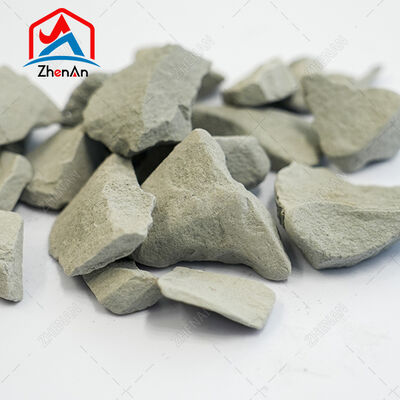
FeSiN Ferrosilicon Nitride | Stable Nitrogen & Low Impurity for Slag Resistance in Blast Furnace Refractories
What Is FeSiN and Why It Is Used in Blast Furnace Refractory Systems
FeSiN (Ferrosilicon Nitride) is a nitrogen-containing ferroalloy material formed through controlled nitridation of ferrosilicon under high-temperature conditions. It contains chemically bonded nitrogen phases that actively participate in refractory structure formation during service.
In blast furnace refractory systems—especially in taphole clay, runner linings, and slag-contact zones—FeSiN is used as a functional additive to enhance slag resistance, structural stability, and erosion control under continuous molten metal exposure.
ZhenAn supplies low-impurity, stable-nitrogen FeSiN engineered for high-performance slag resistance in blast furnace refractory applications.
Why Slag Resistance Is Critical in Blast Furnace Refractories
In blast furnace operations, refractories are constantly exposed to aggressive slag chemistry, high-temperature molten iron, and dynamic flow conditions. Slag penetration and chemical corrosion are among the primary causes of refractory failure.
When slag enters the refractory structure:
- It dissolves binding phases
- Weakens structural integrity
- Accelerates wear and erosion
- Reduces campaign life of furnace linings
Therefore, improving slag resistance is a key engineering requirement for stable and long-term furnace operation.
How FeSiN Improves Slag Resistance in Blast Furnace Refractories
FeSiN improves slag resistance through both chemical and structural mechanisms:
1. Formation of Nitrided Protective Phases
During high-temperature operation, FeSiN contributes nitrogen to form Si₃N₄-based phases that are chemically stable against molten slag attack.
2. Reduced Slag Wetting Ability
Nitride-containing phases reduce the wettability of slag on refractory surfaces, limiting penetration depth.
3. Dense Microstructure Formation
FeSiN promotes a tighter packing structure in refractory matrices, reducing open porosity pathways for slag infiltration.
4. Chemical Inertness Enhancement
Nitrogen-stabilized phases increase resistance against acidic and basic slag reactions.
Why Do Impurities Affect Refractory Corrosion Resistance?
Impurity in FeSiN, such as excess oxygen, free iron oxides, or inconsistent silicon phases, can negatively affect refractory performance.
Impurity-related issues include:
- Formation of weak secondary phases
- Increased porosity in the refractory matrix
- Reduced nitridation efficiency
- Accelerated slag penetration pathways
Low-impurity FeSiN ensures more stable reaction behavior and stronger protective phase formation.
Can FeSiN Reduce Slag Penetration in Lining Materials?
Yes. FeSiN significantly reduces slag penetration by modifying both surface and internal structure characteristics of refractories.
It achieves this by:
- Densifying refractory microstructure
- Creating chemically resistant nitride phases
- Reducing capillary channels inside the lining
- Improving resistance to molten slag wetting
This results in slower erosion and longer furnace lining life.
How Nitrogen Contributes to Slag Resistance Performance
Nitrogen plays a central role in high-temperature refractory chemistry.
In FeSiN systems, nitrogen:
- Forms stable Si₃N₄ ceramic networks
- Enhances chemical inertness of the matrix
- Improves resistance to slag dissolution
- Stabilizes high-temperature phase structure
The presence of stable nitrogen is therefore directly linked to corrosion resistance performance.
What Is the Effect of Low Impurity FeSiN in Refractory Stability?
Low impurity FeSiN provides more predictable and uniform behavior during furnace operation.
Its benefits include:
- Consistent nitridation reactions
- Improved structural integrity of refractory lining
- Reduced variability between production batches
- Lower risk of localized weak zones
This leads to more stable furnace performance and reduced maintenance cycles.
Why Chemical Purity Is Important in High-Temperature Refractories
Chemical purity directly determines how FeSiN behaves under extreme thermal conditions.
High purity ensures:
- Controlled phase transformation
- Efficient nitrogen utilization
- Stable interaction with slag chemistry
- Reduced formation of unwanted byproducts
Impure materials often lead to unpredictable refractory degradation and shortened service life.
How FeSiN Interacts with Molten Slag Chemistry
FeSiN interacts with slag primarily through surface reaction and phase stabilization effects.
During operation:
- Nitrogen-bearing phases resist slag dissolution
- Silicon-based compounds reduce chemical attack intensity
- Protective layers form at the slag-refractory interface
- Slag viscosity near the surface is slightly modified
This slows down chemical erosion and extends refractory lifespan.
Can FeSiN Improve Furnace Lining Durability?
Yes. FeSiN improves furnace lining durability through a combination of mechanical reinforcement and chemical protection.
It enhances durability by:
- Strengthening internal bonding structure
- Reducing slag penetration depth
- Increasing resistance to thermal and chemical stress
- Stabilizing long-term microstructure integrity
This makes it highly suitable for high-intensity blast furnace environments.
Technical Specifications of FeSiN
| Item |
Specification |
| Product Name |
Ferrosilicon Nitride |
| Chemical System |
Fe–Si–N |
| Nitrogen Content |
25–35% (controlled grade) |
| Impurity Level |
Low impurity controlled production |
| Particle Size |
0–3 mm / customized |
| Appearance |
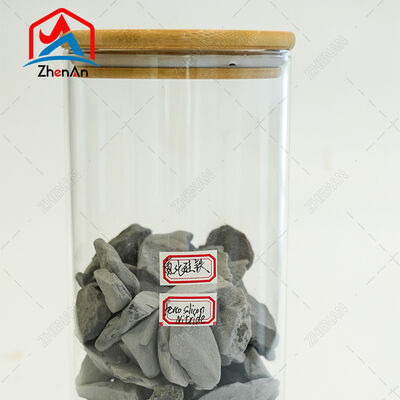
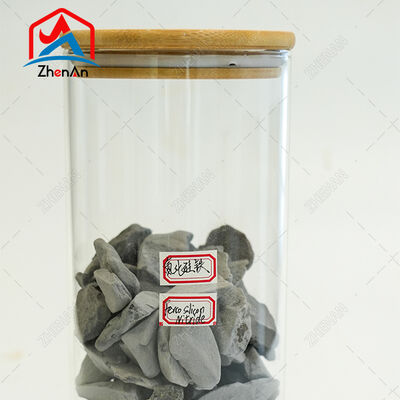
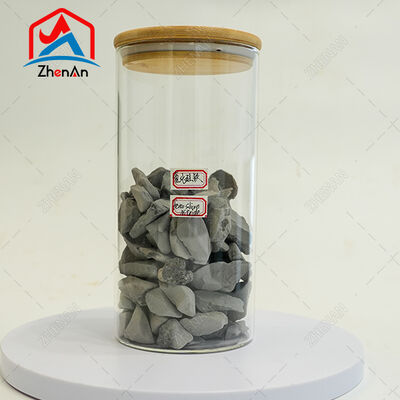
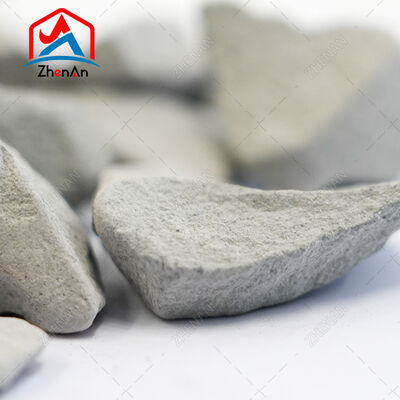
Grey granular solid |
| Application |
Blast furnace refractories / slag-resistant systems |
Low-Impurity FeSiN vs Conventional FeSiN
| Parameter |
Low-Impurity FeSiN |
Conventional FeSiN |
| Slag Resistance |
High |
Medium |
| Chemical Stability |
Strong |
Variable |
| Refractory Lifespan Impact |
Significant extension |
Moderate |
| Porosity Control |
Better |
Less controlled |
| Batch Consistency |
High |
Inconsistent |
| Industrial Suitability |
High-performance BF systems |
General applications |
Product Delivery, Packaging, and Logistics
ZhenAn supplies Ferrosilicon Nitride in controlled granular form designed for refractory mixing and steel plant applications.
Standard packaging includes:
- 25kg moisture-resistant bags
- 1MT jumbo bags
- Reinforced palletized export packaging
Each shipment includes:
- COA (Chemical Composition Report)
- Nitrogen content certification
- Particle size distribution analysis
- Quality consistency inspection data
Export logistics are optimized for continuous supply to steel and refractory industries.
FAQ
How does FeSiN improve slag resistance in blast furnace refractories?
It forms nitrided phases that resist chemical attack and reduce slag penetration.
Why do impurities affect refractory corrosion resistance?
They create weak phases and increase porosity, accelerating slag attack.
Can FeSiN reduce slag penetration in lining materials?
Yes, by densifying the refractory structure and reducing permeability.
How does nitrogen contribute to slag resistance?
It forms stable ceramic phases that resist chemical dissolution.
What is the effect of low impurity FeSiN?
It improves stability and ensures consistent refractory performance.
Why is chemical purity important?
Because impurities reduce phase stability and increase corrosion risk.
How does FeSiN interact with molten slag?
It forms protective interfaces that slow chemical reaction rates.
Can FeSiN improve furnace lining durability?
Yes, by enhancing both mechanical and chemical resistance.
Why Steel Plants Choose ZhenAn FeSiN
ZhenAn provides low-impurity Ferrosilicon Nitride engineered for superior slag resistance, stable nitrogen performance, and long refractory service life in blast furnace systems. Our controlled production process ensures consistent quality and reliable industrial performance.


 Your message must be between 20-3,000 characters!
 English